Creative production · original IP development · visual governance
The Adventures of Grogg
How Briana turned an inherited early-reader premise into a governed adult satirical property—directing world-building, character development, exact visual canon, iterative 3D production and evidence-backed review around Grogg the Highland Coffee Bag.
9successive 3D development versions retained from v0.1 through v0.9
8supporting characters advanced into an approved ensemble direction
4exact hash-identified 2D character references recorded as canon
2independent technical audits passed by the current v0.9 direction candidate
Approved character direction
Meet the governed cast.
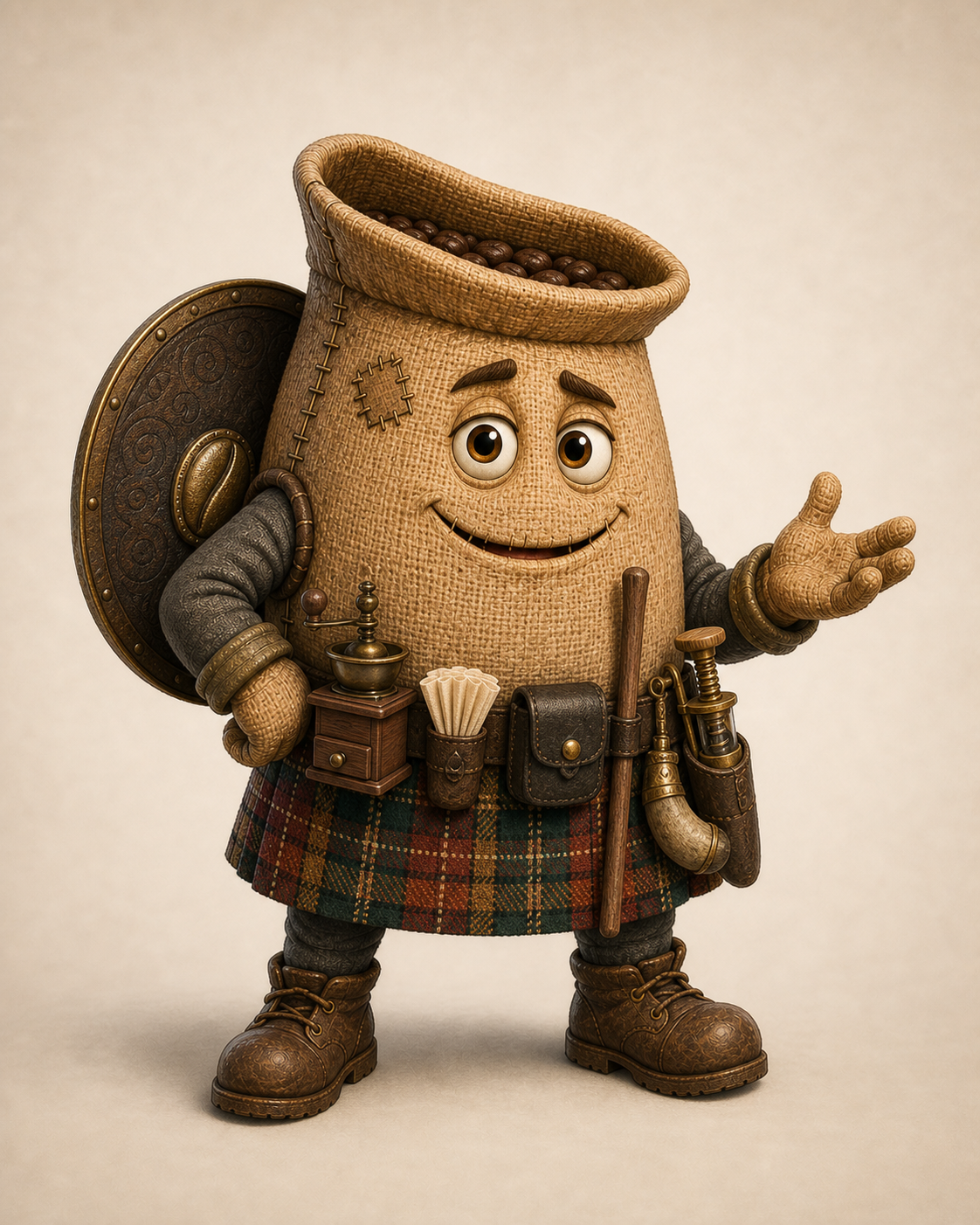
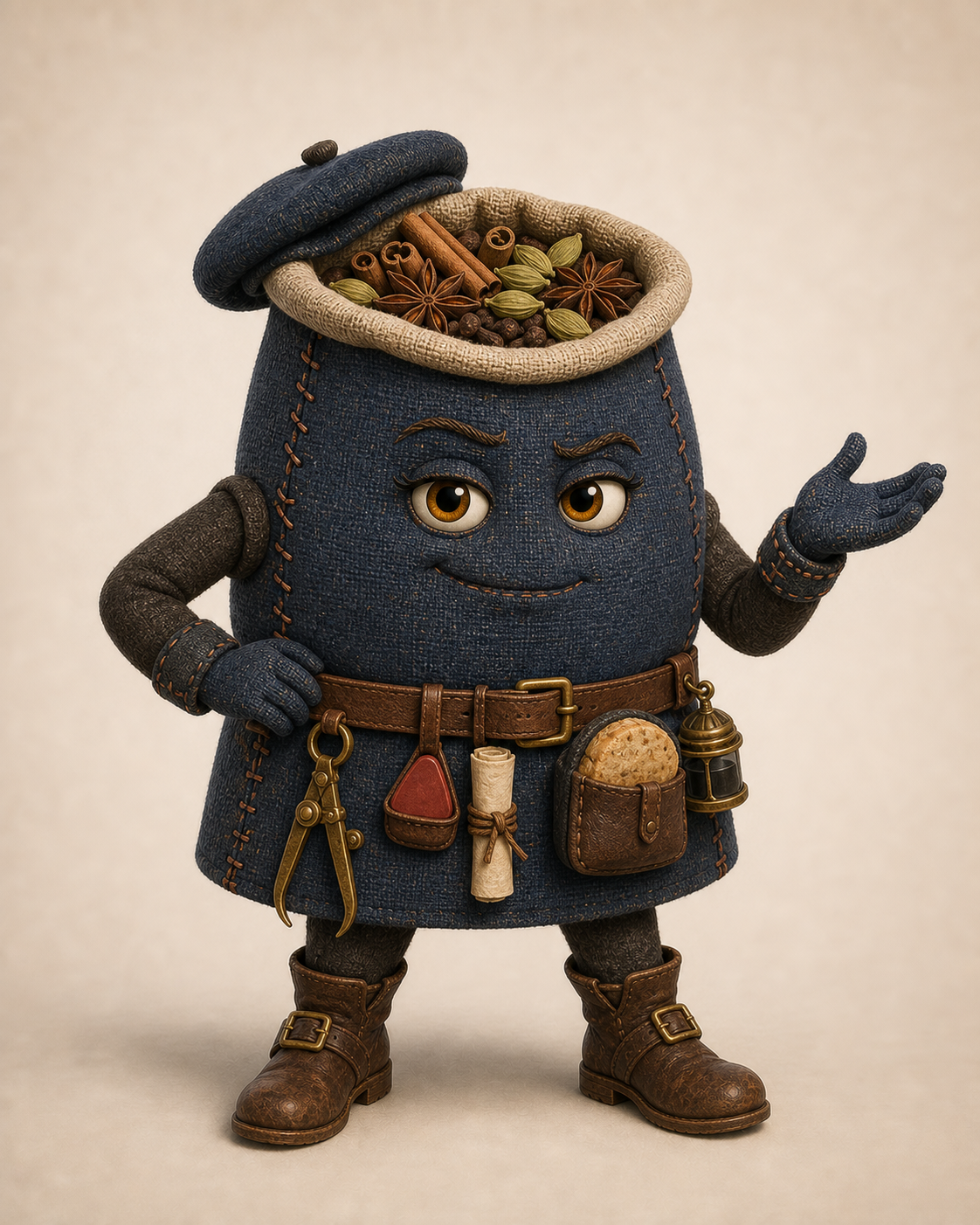
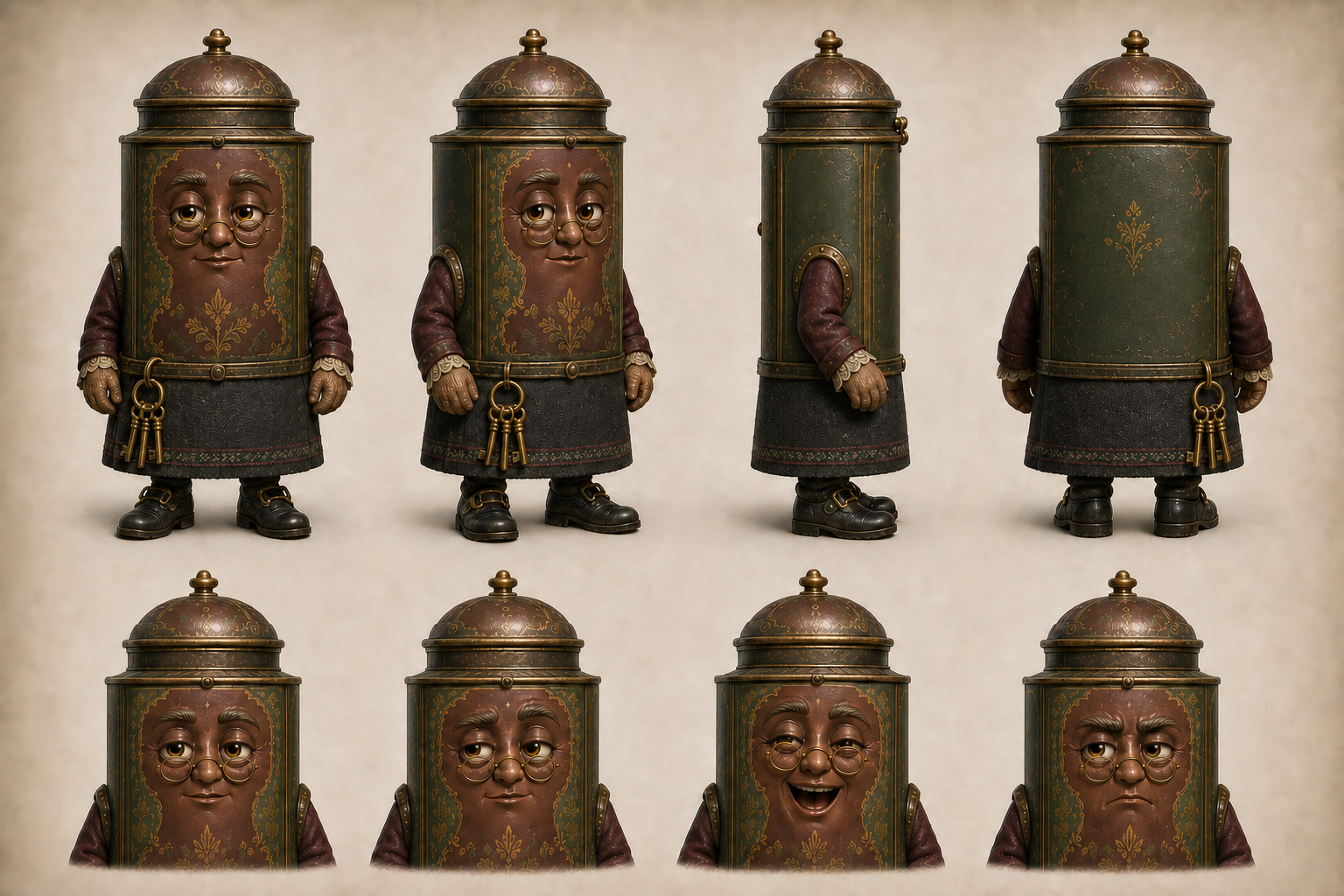
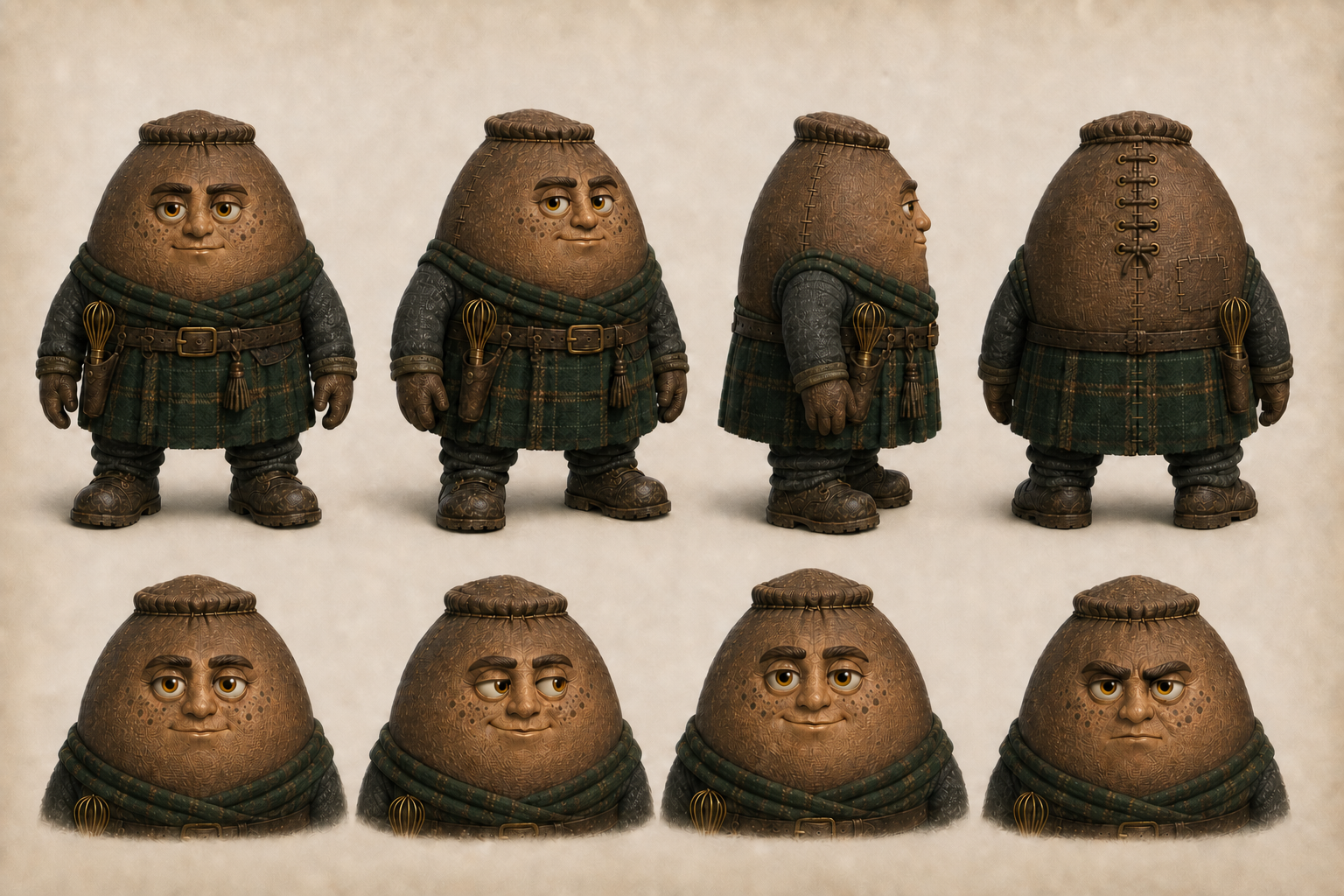
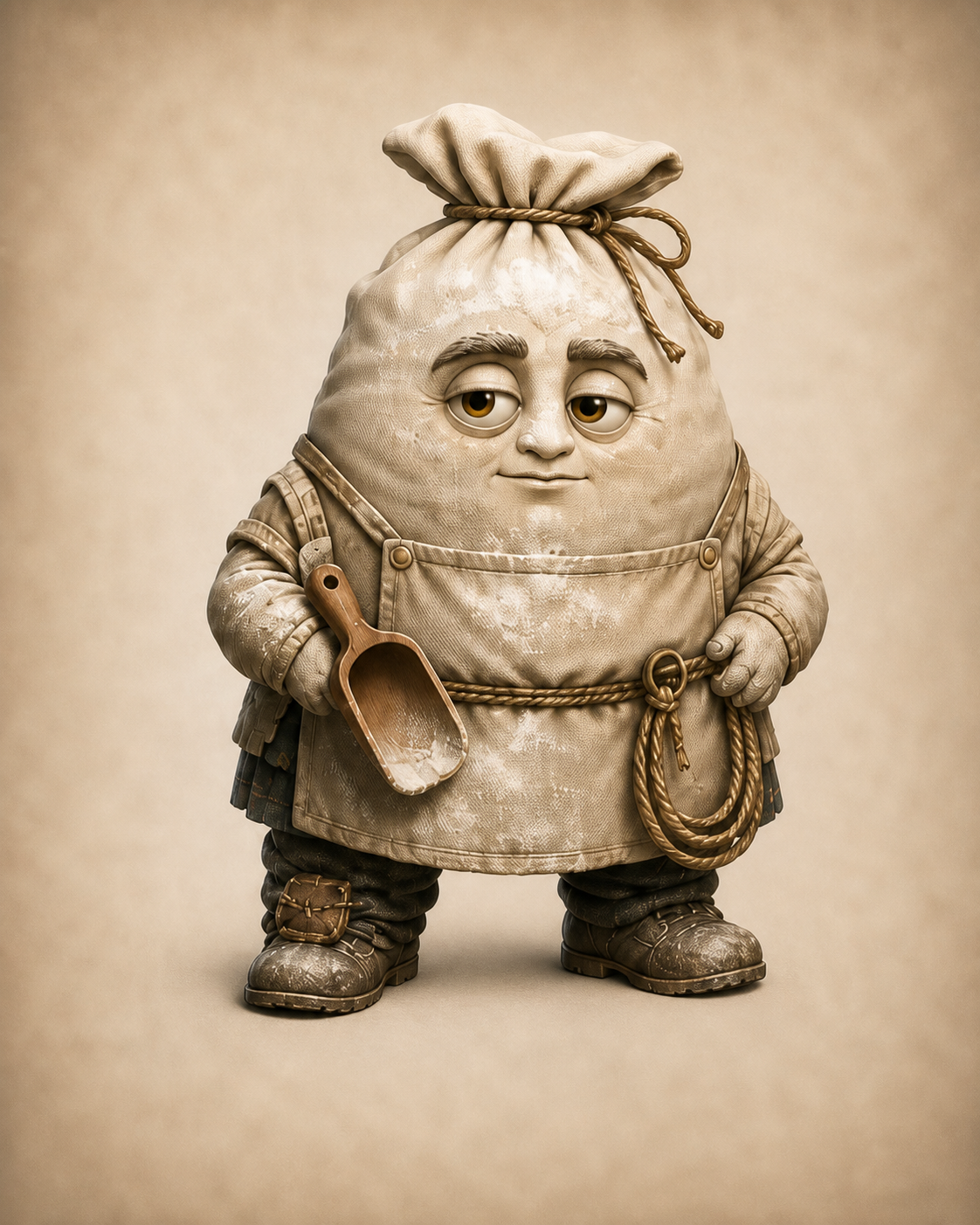
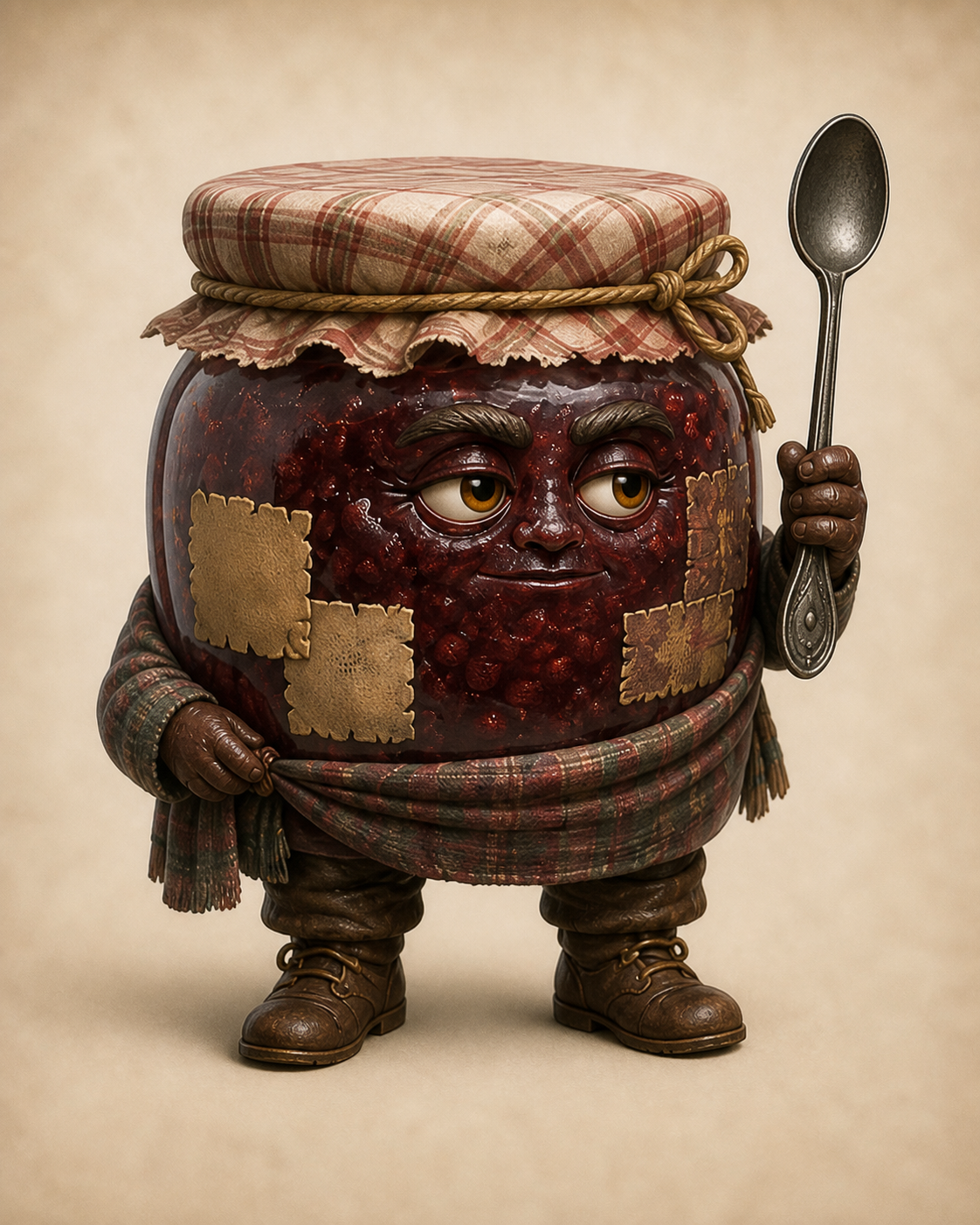
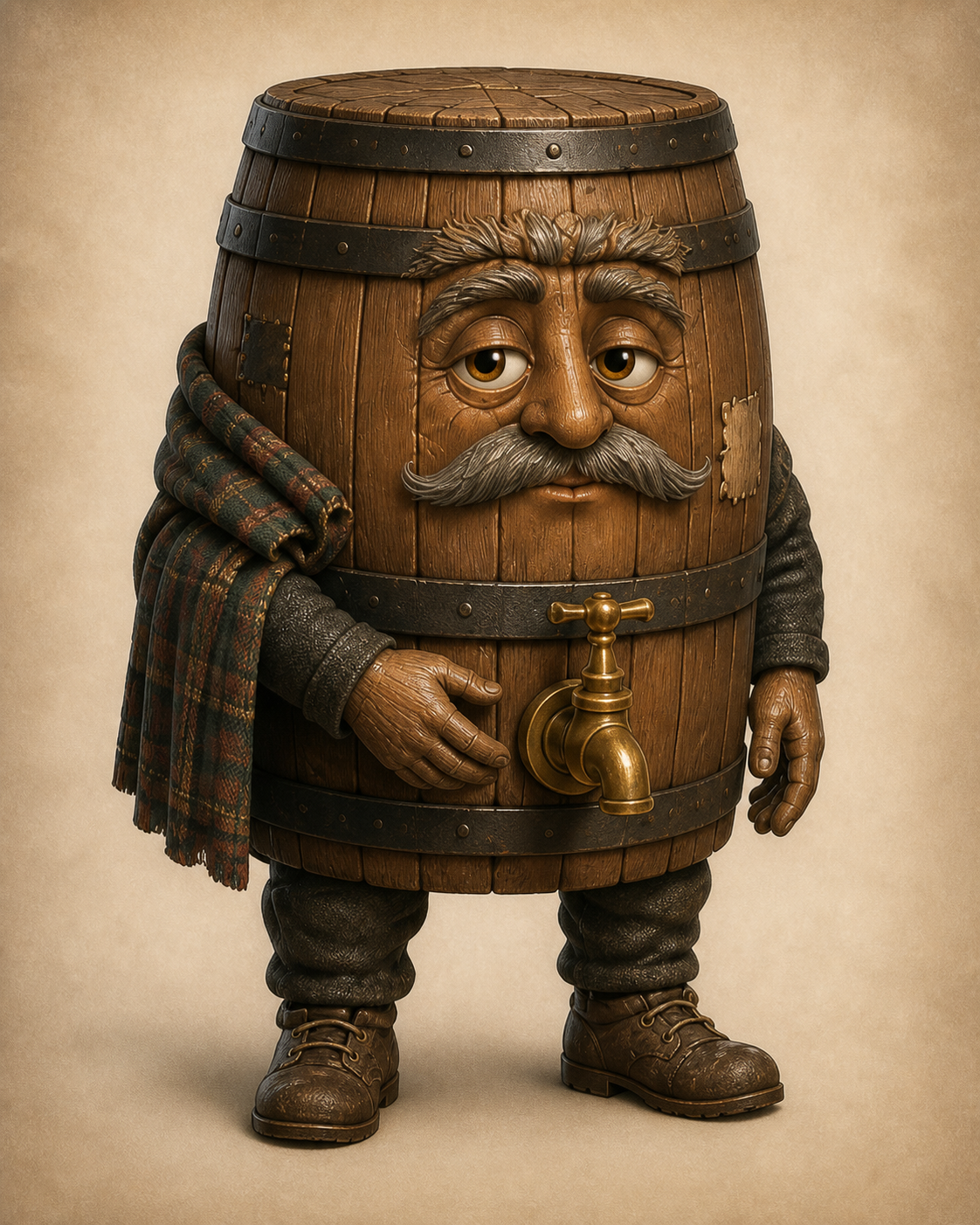
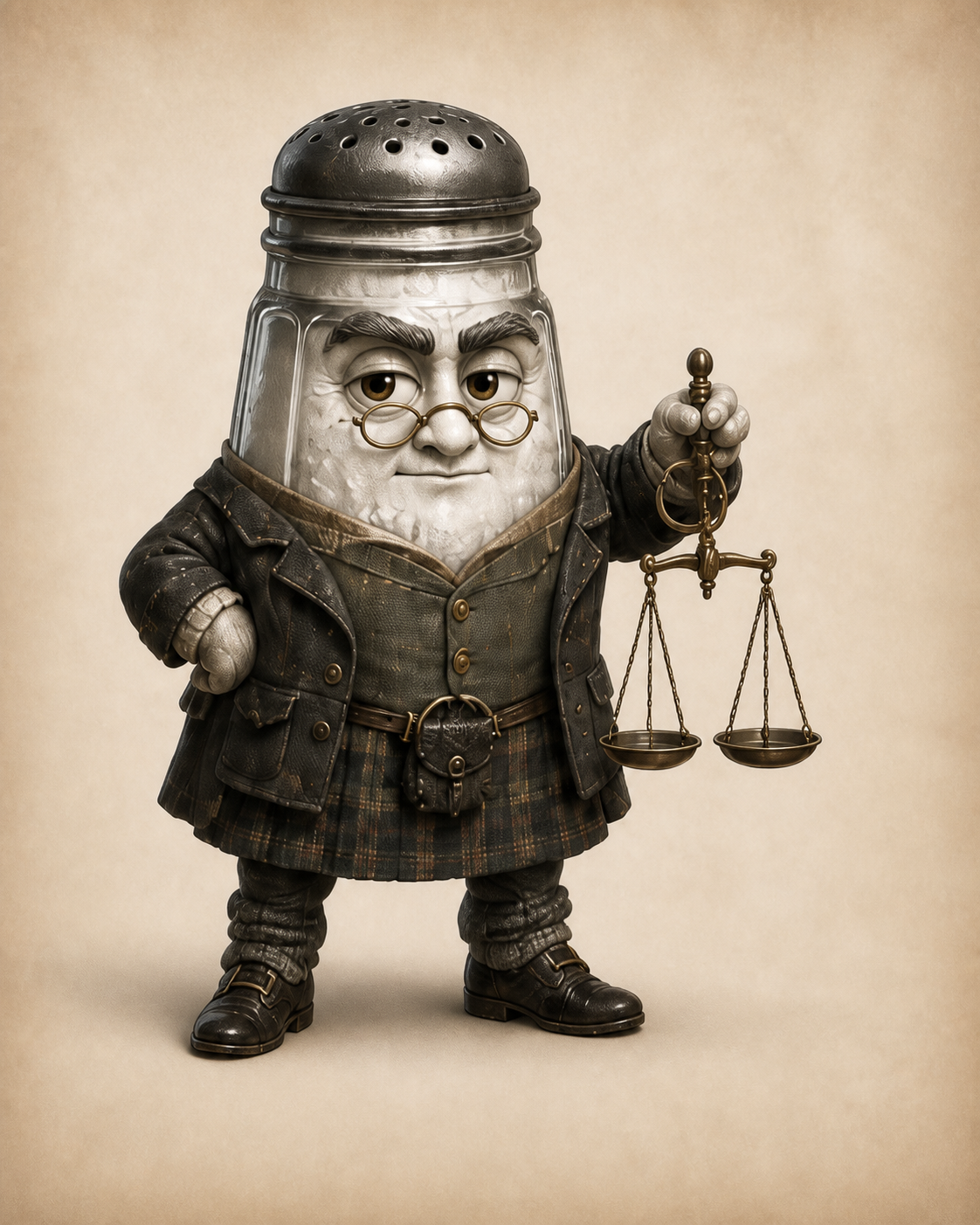
These are exact canon reference images from the Grogg production record—not newly generated substitutes. Model-sheet layouts are shown intact so the portfolio preserves their approved design evidence.
GroggHighland Coffee Bag · equipped canon referenceAdaraSpice Satchel · canon character referenceMabelTea Caddy · canon model sheetTheoCocoa Sack · canon model sheet
Character development review · mixed canon status
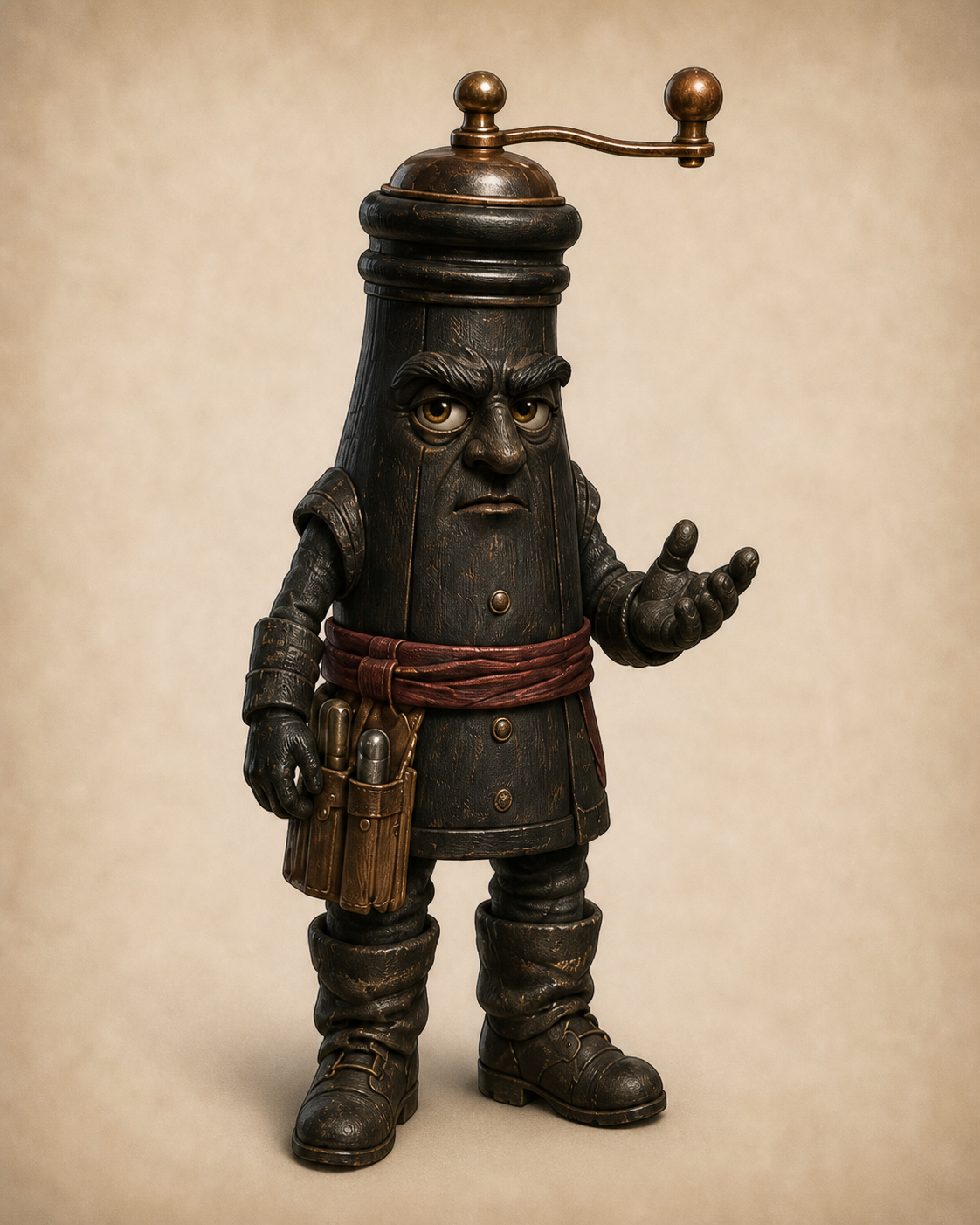
Six characters, six comic engines, six separate approval gates.
Drawn from The Adventures of Grogg — Character Portraits, Profiles and Scene Reference. Wave One ensemble direction is approved; the individual portraits and profile wording below remain development material until separately approved. Portrait approval and prose approval are independent decisions.
Current status: all six portrait candidates are NOT CANON. They demonstrate Briana's character-system direction, exact-image review process and Red-Team boundaries; they do not replace approved canon references.
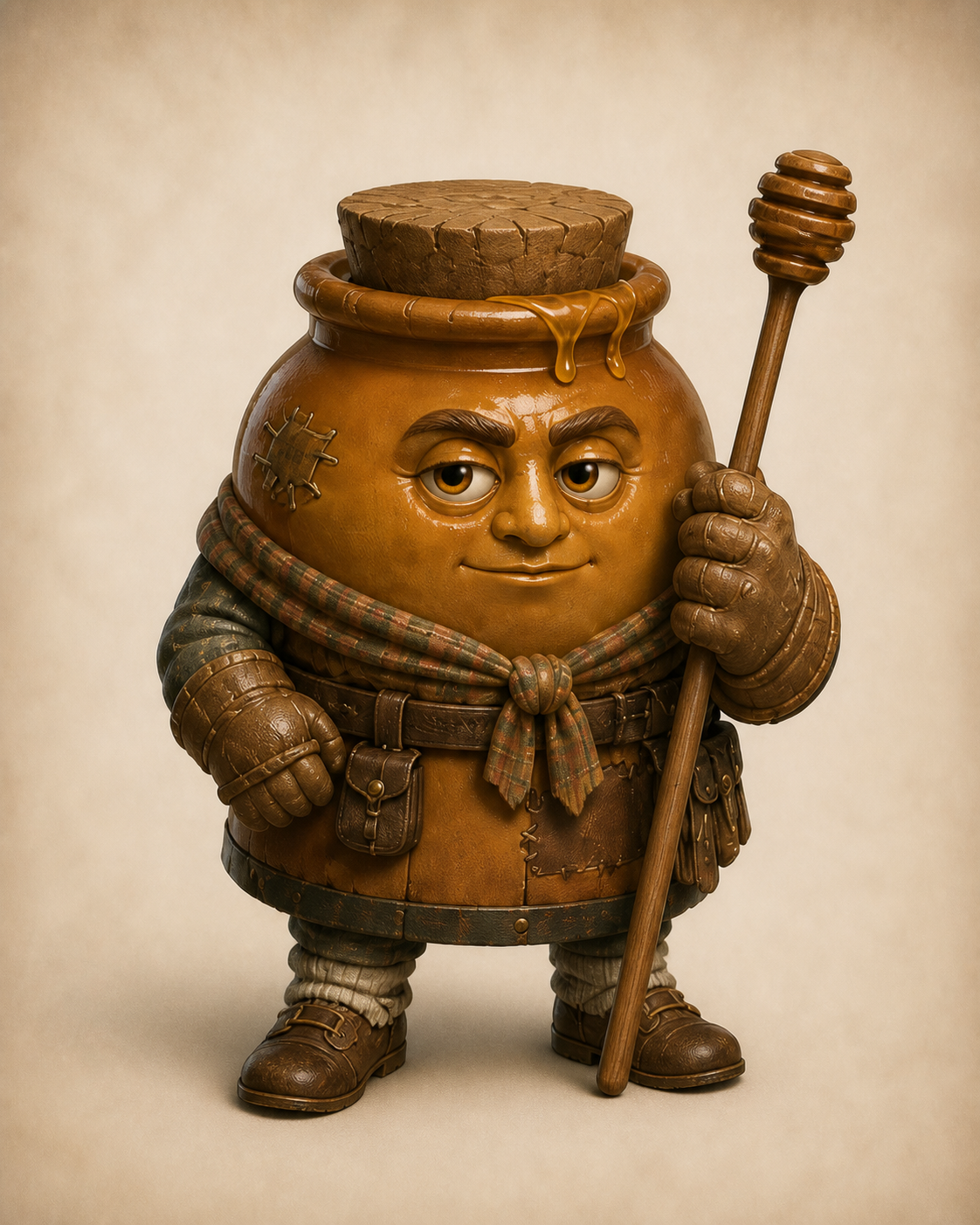
Portrait v0.1 · not canon
Fergus the Flour Sack
Comic engine: an essential-worker expert whose precautions accumulate until anxiety, sneezing and flour clouds require still more precautions.
Red-Team boundary: his mechanism, profession and choices create the heat—not a foreigner stereotype.
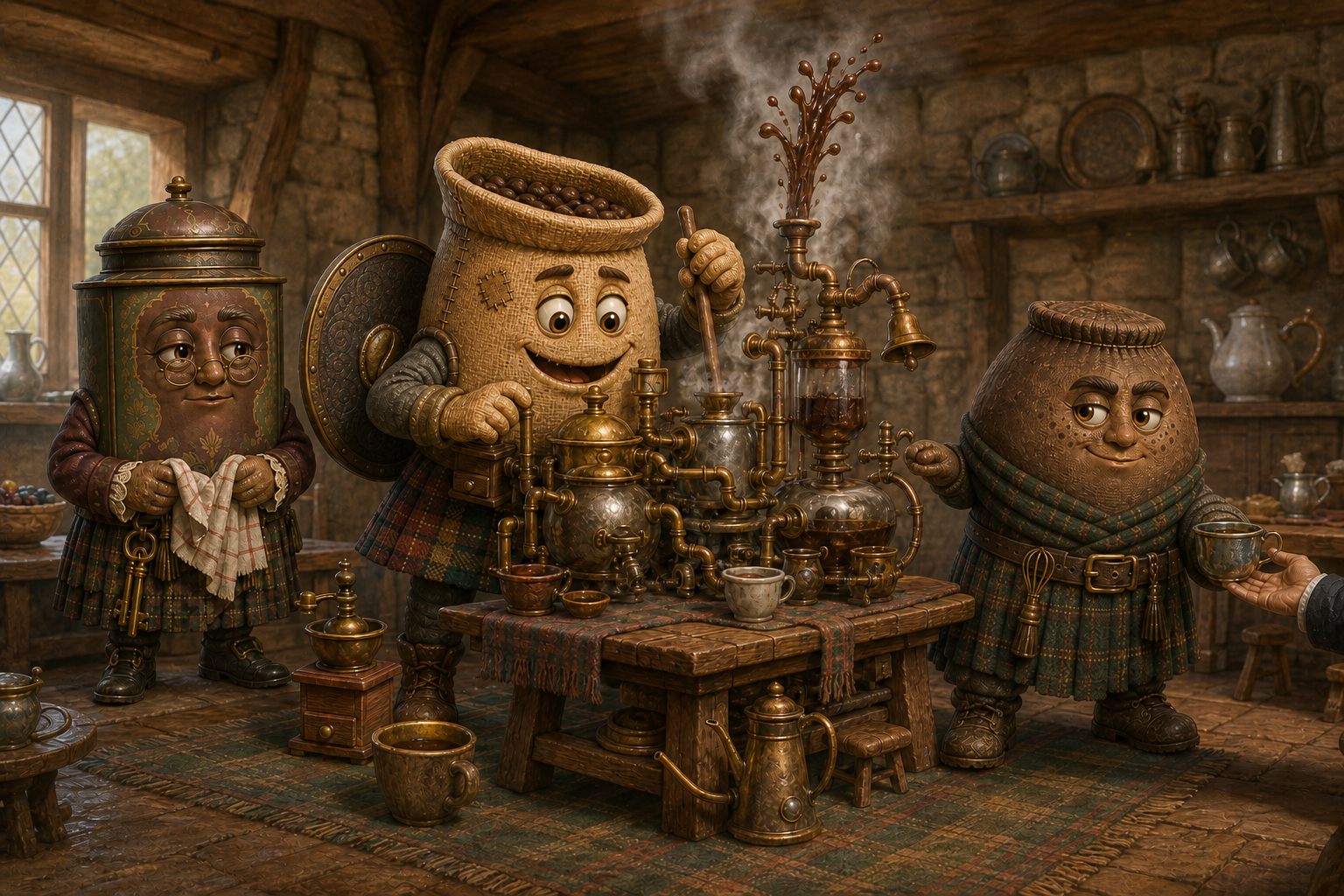
Corrected-arms v0.2 · development-direction reference · not canon
The Breakfast Machine Chemistry Test
Grogg supplies delighted momentum, Mabel supplies procedural control and Theo supplies quiet soft power. Their competence makes the machine's absurd excess more dangerous, not less. The corrected image contains exactly three food-person characters and removes Theo's former third-arm anatomy failure.
Boundary: this is a chemistry and direction test—not a canonical event or exact model sheet. Apparatus details, room dressing, poses and generative micro-detail remain provisional.
The challenge
Rebuild without erasing the spark.
The starting material contained a charming coffee-bag character, early-reader stories and an inconsistent panel illustration. It also carried third-party-character risk, contradictory physical logic and no stable model sheet or production pipeline.
Briana preserved the useful premise while changing the audience, tone and operating discipline: adults aged 18 and over; an invented Highland world; satire that can be dark without mocking sincere emotion; and exact approval boundaries between source, proposal, development direction, technical basis and canon.
Production system
From premise to controlled production.
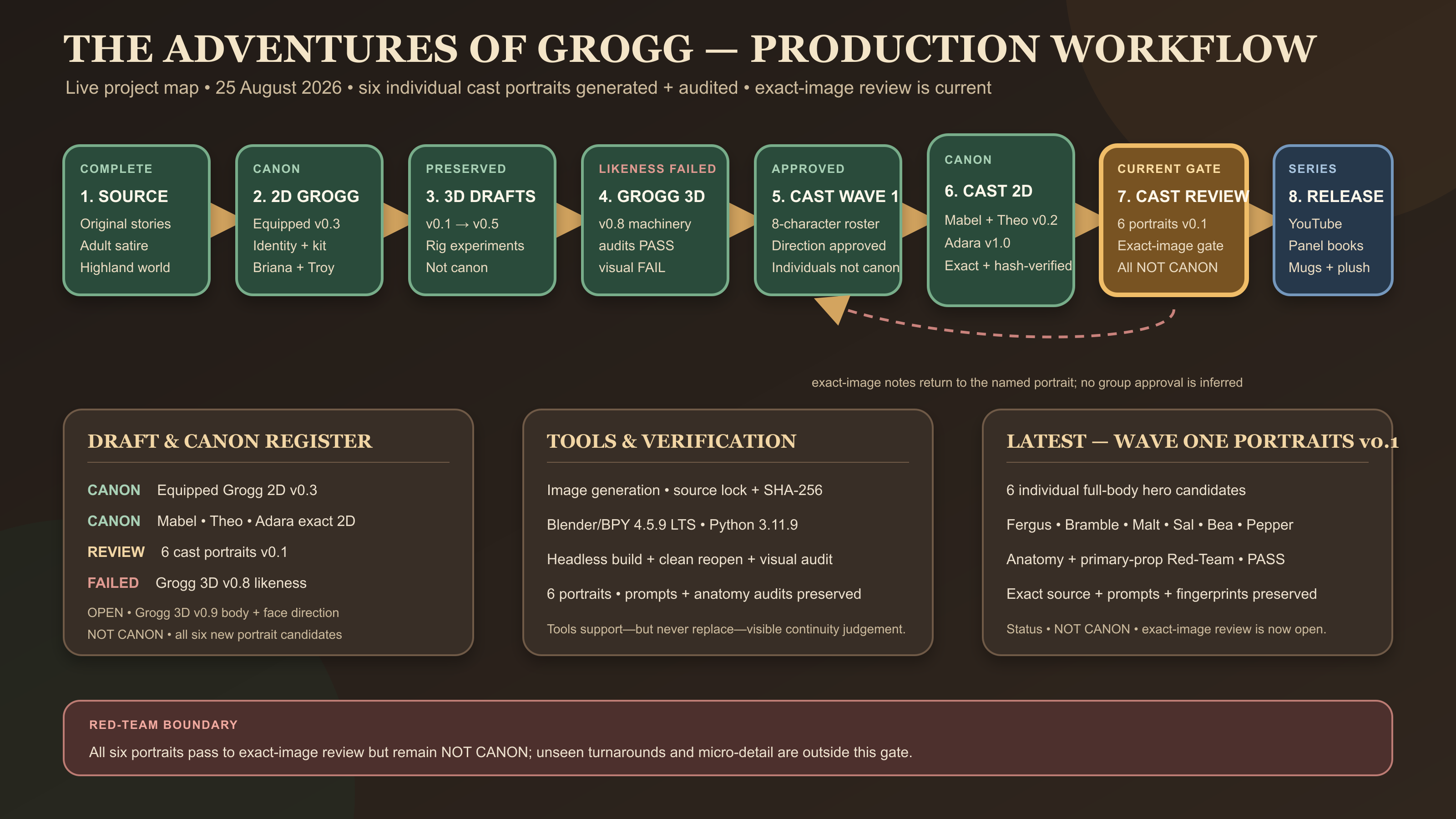
Live production map · 25 August 2026. The diagram preserves the distinction between approved direction, exact canon references, failed visual work and the six current portrait candidates awaiting exact-image review. The portrait candidates remain not canon.
Briana established the adult audience, Highland setting, satirical default and governing tonal rule: the characters believe completely in their lives while the audience notices how ridiculous those lives are.
World and character logic
Grogg became a sentient, refillable coffee bag whose generosity, depletion and need to be useful generate both comedy and adult emotional stakes. Food characters gained homes, institutions, disputes, relationships and cultures of their own.
Visual canon control
Generated work did not become canon by resemblance or convenience. Briana approved exact assets and scopes, preserved rejected candidates and separated visible identity from unseen topology, rear construction and generative micro-detail.
Production QA
Deterministic Blender builds, reopen checks, rig audits, motion diagnostics and canon-comparison renders supported the 3D work. Passing automation never overruled a visible likeness failure.
Decision evidence
Leadership visible in the rejects.
The strongest management evidence is not that every attempt passed. It is that Briana kept approval authority narrow enough for failure to remain meaningful.
Technical success was not visual success
The v0.8 model retained a working 34-bone rig, 11 drivers, 44 bone-parented props and an eight-second diagnostic. It still failed likeness review and was demoted to technical-donor status rather than promoted as finished work.
Anatomy failure became a control
Briana identified an unintended third arm on Theo in a shared character test. The failed image was preserved, the error was corrected, and subsequent specifications bound Theo to exactly two shoulders, arms and hands.
Approval stayed granular
Ensemble direction, individual development direction, controlled specifications and exact visual canon were separate decisions. Approving one did not silently approve the others.
Future work stayed honest
The current v0.9 candidate passed structural and clean-reopen audits but remains not canon and not production-ready. Final sculpting, rig transfer, textures, animation and product execution remain future gates.
Attribution and evidence boundary
Transformation and direction—not retrospective sole authorship.
Public portfolio attribution for The Adventures of Grogg is assigned to Briana at the originating collaborator's request. This case study concerns her documented work: the adult-series transformation, governing creative direction, original character kernels, approval system, visual and production decisions, failure detection and canon authority. That public credit does not erase the private provenance record.
The recent “Oatcake Bothy” home concept remains brainstorming and is not represented as canon. Private source paths, conversation identifiers and unpublished story text are excluded.
Professional signal
What this demonstrates
Creative production managementOriginal IP developmentHuman–AI art directionCanon and asset governanceIterative 3D pipeline oversightQuality assuranceAdversarial reviewAudience and product strategy